Seed Savers Exchange Still Growing
 ✖  |
Looking for Grandpa Ott’s morning glory or German Pink tomatoes? Seed Savers Exchange (SSE) has them and 20,000 more. Founded in 1975 by Kent Whealy and Diane Ott Whealy, SSE offered its 30 members a six-page seed list. Since then, it’s grown into a nonprofit with more than 6,000 supporting members and the 890-acre Heritage Farm headquarters near Decorah, Iowa.
“At Heritage Farm, seeds are planted with both the past and the future in mind,” says Mike Bollinger, executive director. “Some varieties carry stories that stretch back generations. Others are being grown, evaluated and shared with gardeners for the first time.
“For 50 years, Seed Savers Exchange has worked alongside a community of seed savers to ensure these varieties continue to be grown, shared and stewarded for the generations that follow.”
Heritage Farm includes two orchards with hundreds of unique apple varieties, along with heritage poultry breeds and ancient White Park cattle. However, the heart of the farm is seed preservation.
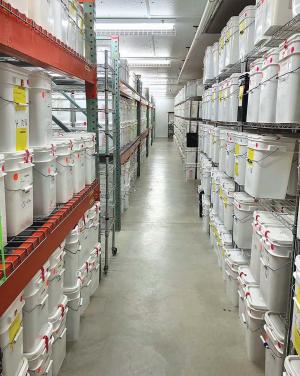
SSE maintains a seed bank of more than 20,000 open-pollinated varieties of flowers, herbs, vegetables and fruit. Nearly 1,000 are grown out each year, isolated to maintain purity, in the farm’s fields, greenhouses and gardens. Harvested seeds are germination-tested, packaged and stored in climate-controlled rooms.
More than 500 potato varieties are maintained in tissue culture. Each year, 30 to 40 varieties are offered by member listers through the Exchange Yearbook.
More than 200 garlic varieties are in the SSE collection. While the best bulbs are saved for replanting, garlic bulbs are also offered for sale. In addition, member listers offer hundreds of varieties.
SSE continues to share the list of available seeds in the Seed Exchange Yearbook. Members at the $50 level and higher receive a complimentary copy. It’s also available for sale to non-members. It’s available online at no cost. Whether digital or print, the listing includes the seeds offered, a description, the grower’s name, and the price.
Members and non-members alike can request the 2027 retail catalog in print or view it online. It features more than 600 seed varieties from the SSE collection. These varieties are also available at the SSE retail shop on the farm.
In addition to the Exchange, SSE also publishes two directories. The Seed Trade Census documents the commercial seed trade in open-pollinated garden seed, while the Nursery Trade Census documents the commercial production of fruits, berries and nuts in the U.S. The directories provide growers with access to what’s available and where to find it.
SSE and its members are involved in every aspect of sharing gardening and seed-saving skills, as well as seeds. Multiple events are held throughout the year and are posted on the SSE website. They include seed-starting and grafting workshops, farm tours, seed swaps and virtual programs. For those who prefer to buy seedlings, SSE holds an annual plant sale each spring. In 2026, more than 3,000 people attended.
“Through seed donations, trials and community programs, thousands of gardeners participate in preserving and growing heirloom crops,” says Bollinger. “In 2025, more than 51,000 seed packets were donated to community gardens and schools through the Herman’s Garden program, while our national network of seed sharers continued to steward more than 14,000 unique varieties through the Exchange Yearbook.”
Visit the SSE website for details on available seeds, directories, events, in-person and virtual workshops, training videos, and much more.
Contact: FARM SHOW Followup, Seed Savers Exchange, 3094 N. Winn Rd.,
Decorah, Iowa 52101 (ph 563-382-5990; www.seedsavers.org).
Click here to download page story appeared in.
Click here to read entire issue
Seed Savers Exchange Still Growing
Looking for Grandpa Ott’s morning glory or German Pink tomatoes? Seed Savers Exchange (SSE) has them and 20,000 more. Founded in 1975 by Kent Whealy and Diane Ott Whealy, SSE offered its 30 members a six-page seed list. Since then, it’s grown into a nonprofit with more than 6,000 supporting members and the 890-acre Heritage Farm headquarters near Decorah, Iowa.
“At Heritage Farm, seeds are planted with both the past and the future in mind,” says Mike Bollinger, executive director. “Some varieties carry stories that stretch back generations. Others are being grown, evaluated and shared with gardeners for the first time.
“For 50 years, Seed Savers Exchange has worked alongside a community of seed savers to ensure these varieties continue to be grown, shared and stewarded for the generations that follow.”
Heritage Farm includes two orchards with hundreds of unique apple varieties, along with heritage poultry breeds and ancient White Park cattle. However, the heart of the farm is seed preservation.
SSE maintains a seed bank of more than 20,000 open-pollinated varieties of flowers, herbs, vegetables and fruit. Nearly 1,000 are grown out each year, isolated to maintain purity, in the farm’s fields, greenhouses and gardens. Harvested seeds are germination-tested, packaged and stored in climate-controlled rooms.
More than 500 potato varieties are maintained in tissue culture. Each year, 30 to 40 varieties are offered by member listers through the Exchange Yearbook.
More than 200 garlic varieties are in the SSE collection. While the best bulbs are saved for replanting, garlic bulbs are also offered for sale. In addition, member listers offer hundreds of varieties.
SSE continues to share the list of available seeds in the Seed Exchange Yearbook. Members at the $50 level and higher receive a complimentary copy. It’s also available for sale to non-members. It’s available online at no cost. Whether digital or print, the listing includes the seeds offered, a description, the grower’s name, and the price.
Members and non-members alike can request the 2027 retail catalog in print or view it online. It features more than 600 seed varieties from the SSE collection. These varieties are also available at the SSE retail shop on the farm.
In addition to the Exchange, SSE also publishes two directories. The Seed Trade Census documents the commercial seed trade in open-pollinated garden seed, while the Nursery Trade Census documents the commercial production of fruits, berries and nuts in the U.S. The directories provide growers with access to what’s available and where to find it.
SSE and its members are involved in every aspect of sharing gardening and seed-saving skills, as well as seeds. Multiple events are held throughout the year and are posted on the SSE website. They include seed-starting and grafting workshops, farm tours, seed swaps and virtual programs. For those who prefer to buy seedlings, SSE holds an annual plant sale each spring. In 2026, more than 3,000 people attended.
“Through seed donations, trials and community programs, thousands of gardeners participate in preserving and growing heirloom crops,” says Bollinger. “In 2025, more than 51,000 seed packets were donated to community gardens and schools through the Herman’s Garden program, while our national network of seed sharers continued to steward more than 14,000 unique varieties through the Exchange Yearbook.”
Visit the SSE website for details on available seeds, directories, events, in-person and virtual workshops, training videos, and much more.
Contact: FARM SHOW Followup, Seed Savers Exchange, 3094 N. Winn Rd.,
Decorah, Iowa 52101 (ph 563-382-5990; www.seedsavers.org).
To read the rest of this story, download this issue below or click
here to register with your account number.